Summary
- Basement finishing transforms an unfinished basement into a livable space by adding walls, flooring, ceilings, lighting, and insulation.
- Basement remodeling updates or redesigns an already finished basement to improve its appearance, functionality, or layout.
- Finishing projects typically cost less and have shorter timelines than remodeling projects.
- Remodeling offers greater design flexibility and often includes custom features such as home theaters, wet bars, or guest suites.
- The right option depends on your basement's current condition, budget, and long-term goals for the space.
- Both finishing and remodeling can increase usable square footage, enhance comfort, and add value to your Indianapolis home.
If you’re planning to upgrade your basement, you’ve probably come across the terms basement finishing and basement remodeling. While they may sound similar, they refer to two very different types of projects.
Understanding the difference can help you make smarter decisions about your budget, timeline, and long-term goals. Whether you’re looking to add more living space, create a home office, or modernize an outdated basement, choosing the right approach is the first step.
We’ve worked with many homeowners across Indianapolis and Central Indiana who weren’t sure whether they needed basement finishing or basement remodeling. The answer often depends on the current condition of the space and how you want to use it in the future.
Basement Finishing vs Basement Remodeling at a Glance
The simplest way to understand the difference is to look at where the project begins.
Basement Finishing | Basement Remodeling |
Starts with an unfinished basement | Starts with a finished basement |
Creates livable space from scratch | Updates or redesigns existing space |
Typically lower cost | Often higher cost |
Faster timeline | More extensive construction |
Focuses on basic functionality | Focuses on customization and upgrades |
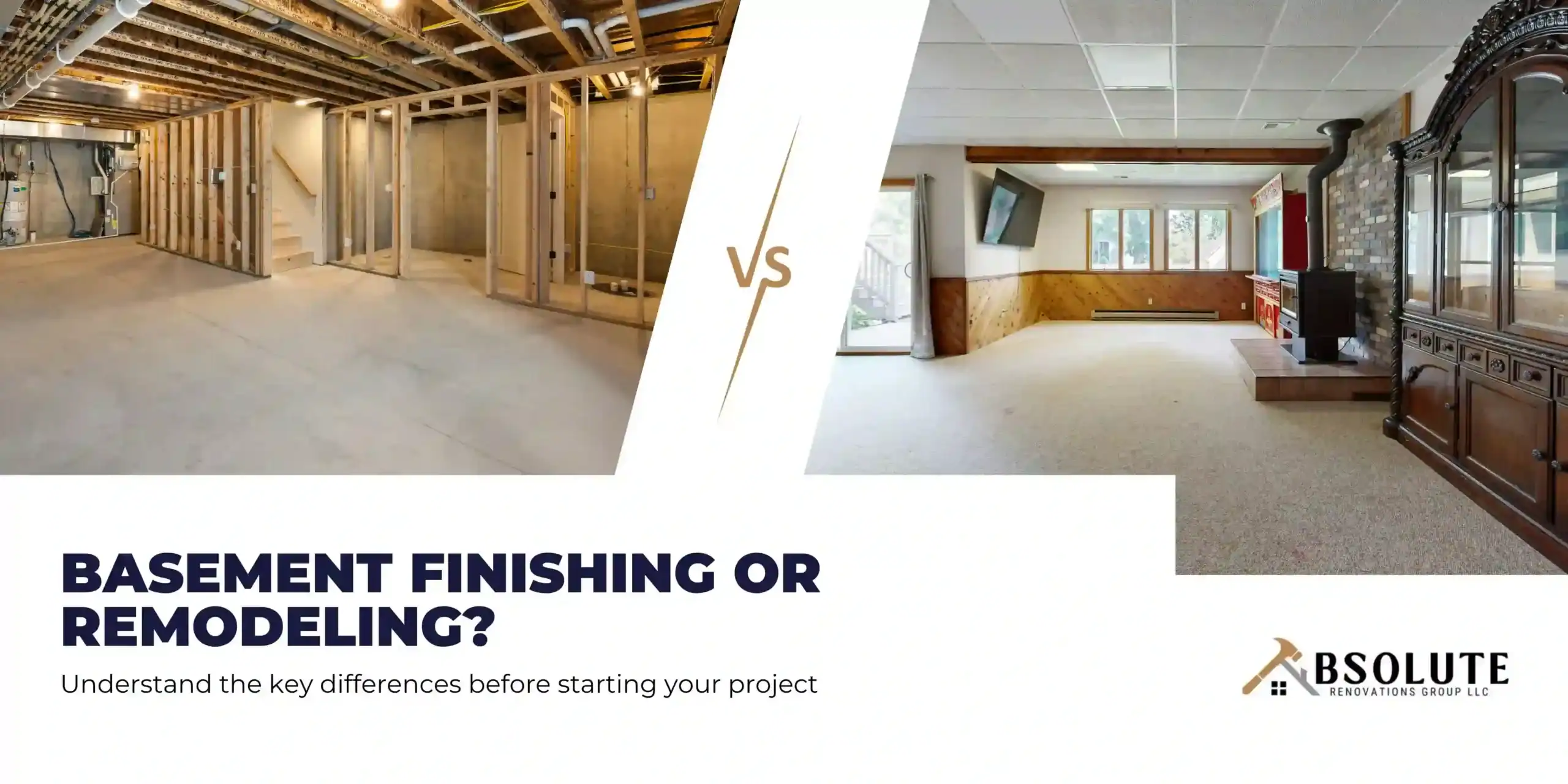
In short, basement finishing transforms an unfinished area into usable living space, while basement remodeling improves or reconfigures a space that’s already finished.
What is Basement Finishing?

Basement finishing involves converting an unfinished basement into a comfortable and functional part of your home.
Most unfinished basements have exposed framing, concrete floors, visible ductwork, and limited lighting. Finishing the basement means adding the features needed to make it feel like the rest of your home.
Common basement finishing work includes:
- Framing and drywall installation
- Flooring installation
- Ceiling finishes
- Electrical and lighting upgrades
- HVAC extensions
- Insulation
- Paint and trim work
For many Indianapolis homeowners, basement finishing is one of the most cost-effective ways to increase usable square footage without building an addition.
If you’re exploring ways to maximize your space, our guide on how to remodel a basement into a functional living space offers practical design and layout ideas that homeowners can use to plan their project.
Why Homeowners Choose Basement Finishing
Many families choose basement finishing when they need:
- A home office
- A playroom for children
- A guest room
- A fitness area
- Additional entertainment space
We’ve seen homeowners throughout Indianapolis, Fishers, Carmel, Noblesville, and Westfield gain significant value from transforming unused basement space into functional living areas.
What is Basement Remodeling?

Basement remodeling focuses on improving an existing finished basement. Instead of starting with bare concrete and exposed utilities, remodeling begins with a space that already has walls, flooring, and finished surfaces.
The goal is usually to modernize, reconfigure, or enhance the basement to better suit current needs.
Typical basement remodeling projects include:
- Updating outdated finishes
- Removing walls and changing layouts
- Installing custom storage
- Creating a home theater
- Adding a wet bar
- Building a basement guest suite
- Renovating a basement bathroom
A basement that was finished 15 or 20 years ago may no longer fit today’s lifestyle. Homeowners working remotely, accommodating aging parents, or creating entertainment areas often choose remodeling over finishing.
For inspiration, explore some popular basement remodeling ideas for modern homes that are trending across Indianapolis neighborhoods.
Key Differences Between Basement Finishing and Basement Remodeling
Although both projects improve your basement, there are several important differences.
Factor | Basement Finishing | Basement Remodeling |
Starting Point | Begins with an unfinished basement that has exposed concrete, framing, or utilities. | Starts with an already finished basement that needs updates, improvements, or a new layout. |
Scope of Work | Focuses on transforming unused space into a functional living area by adding walls, flooring, ceilings, lighting, and insulation. | Focuses on upgrading, redesigning, or reconfiguring an existing finished basement to better suit current needs. |
Cost | Typically costs less because the project centers on creating standard living space. | Usually costs more due to demolition, structural changes, plumbing work, custom features, or layout modifications. |
Design Flexibility | Offers moderate customization while establishing the basement’s basic functionality and appearance. | Provides greater flexibility for personalized designs, specialty rooms, and premium upgrades. |
Timeline | Generally has a shorter construction timeline since it follows a more straightforward process. | Often takes longer because it may involve demolition, redesign, and more complex construction work. |
Primary Goal | Create usable square footage from an unfinished basement. | Improve the appearance, functionality, and value of an existing finished basement. |
Best For | Homeowners looking to add living space to an unfinished basement. | Homeowners who want to modernize, expand, or repurpose a finished basement. |
Examples | Adding a family room, home office, gym, or playroom to an unfinished basement. | Creating a home theater, wet bar, guest suite, or updating an outdated basement design. |
Which Option is Right for Your Indianapolis Home?
The right choice depends on your basement’s current condition and your goals.
Basement Finishing May Be Best If:
- Your basement is unfinished
- You need additional living space
- You’re looking for a strong return on investment
- You want a relatively straightforward project
Basement Remodeling May Be Best If:
- Your basement is already finished
- The design feels outdated
- Your family needs have changed
- You want specialized features such as a theater, bar, or guest suite
When helping homeowners evaluate their options, our team focuses on how the space will function five to ten years from now, not just today.
Basement Challenges Homeowners Should Address First

One area that many articles overlook is how local conditions affect basement projects. Indiana homeowners, in particular, face a distinct set of regional challenges that can impact the outcome of any basement-related work.
1. Moisture and Humidity
Indianapolis experiences humid summers, heavy spring rains, and seasonal weather changes that can create moisture issues in basements.
Before investing in new flooring or drywall, it’s important to evaluate the space for water intrusion.
Homeowners considering basement finishing should review strategies for waterproofing a basement before finishing to help protect their investment.
2. Freeze-Thaw Cycles
Indiana winters bring repeated freeze-thaw cycles that can place stress on foundations over time. As the ground expands and contracts, small foundation cracks can gradually become larger and lead to moisture intrusion or structural concerns.
While not every crack indicates a serious issue, it’s wise to have foundation concerns evaluated before construction begins. Addressing potential problems early is typically much easier and less expensive than repairing finished walls and flooring later.
3. Aging Homes
Many homes throughout Indianapolis, Broad Ripple, Irvington, and surrounding communities were built decades ago and may require additional upgrades before a basement can be finished or remodeled.
Common issues include:
- Aging foundation walls
- Lower-than-modern ceiling heights
- Outdated electrical systems
- Limited insulation
- Older plumbing infrastructure
- Inadequate lighting and ventilation
Addressing these challenges early often leads to a smoother renovation, better energy efficiency, and longer-lasting results.
Basement Finishing vs Remodeling Costs in Indianapolis
Cost is often one of the biggest factors homeowners consider. While every project is unique, several factors influence pricing:
Basement Finishing Cost Factors
- Basement size
- Framing requirements
- Flooring selections
- Lighting upgrades
- Insulation needs
- Permit requirements
Basement Remodeling Cost Factors
- Demolition work
- Layout changes
- Plumbing additions
- Bathroom installations
- Custom features
- Structural modifications
For homeowners researching budgets, our guide to the average basement finishing cost in Indianapolis provides a detailed breakdown of what to expect.
Permits and Building Codes in Indianapolis
Permits are often required for basement finishing and remodeling projects, especially when electrical, plumbing, or structural work is involved.
Common permit-related considerations include:
- Egress window requirements for bedrooms
- Electrical inspections
- Plumbing inspections
- Framing approvals
- Fire safety compliance
Our team helps homeowners navigate local permitting requirements to avoid delays and costly mistakes.
If you’re preparing for a project, our permit cost guide for basement finishing in Indianapolis explains what homeowners should know before construction begins.
Frequently Asked Questions
Q. Is basement finishing cheaper than basement remodeling?
In most cases, yes. Basement finishing generally involves creating a standard living space, while remodeling often includes custom upgrades and layout changes that increase costs.
Q. Does finishing a basement increase home value in Indianapolis?
A professionally finished basement can improve resale appeal and increase usable square footage, making it attractive to potential buyers.
Q. Do I need a permit to finish my basement in Indianapolis?
Many basement projects require permits, especially when electrical, plumbing, or structural work is involved. In Indiana, projects that involve framing, electrical, plumbing, or egress windows require permits, while purely cosmetic updates such as painting walls or laying carpet generally don’t.
Q. Should I waterproof my basement before finishing it?
Absolutely. Moisture issues should always be addressed before installing drywall, flooring, or insulation.
Q. What rooms add the most value to a finished basement?
Home offices, guest suites, entertainment rooms, and multi-purpose family spaces tend to provide strong value for homeowners.
Conclusion
When comparing basement finishing vs basement remodeling, the biggest difference comes down to where your project starts.
If you have an unfinished basement, finishing creates usable living space and often delivers excellent value. If your basement is already finished but no longer meets your needs, remodeling may be the better solution.
We help homeowners throughout Indianapolis and Central Indiana evaluate their options and create basement spaces that are functional, comfortable, and built to last. Whether you’re planning a simple finishing project or a complete basement transformation, having an experienced local team on your side can make all the difference.